Why Liquidity Pools and AMMs Are the Engine of Modern DEXs — and What Traders Still Get Wrong
  • Inicio
  • Nosotros
  • Qué nos distingue
  • Productos
  • Instalaciones
  • Contacto
  • Inicio
  • Nosotros
  • Qué nos distingue
  • Productos
  • Instalaciones
  • Contacto

diciembre 2025

  • imer
  • Sin categoría
  • diciembre 24, 2025

Why Liquidity Pools and AMMs Are the Engine of Modern DEXs — and What Traders Still Get Wrong

Okay, so check this out—liquidity pools feel like somethin’ alive sometimes. Whoa! Most traders see a pool and think: deposit tokens, earn fees, rinse and repeat. But there’s a lot under the hood; fees, slippage, concentrated liquidity, and impermanent loss all move price in ways that surprise even seasoned traders. Initially I thought LPs were just passive yield, but then I realized they behave more like active strategies with unseen risk factors.

Really? Yes. Liquidity pools are just token pair vaults where an algorithm prices trades. Medium-sized trades move the price; large trades can sweep through ranges. The automated market maker (AMM) is the formula that links reserves to price, and while that sounds mechanical it’s really the market’s heartbeat. My instinct said AMMs were simple, though actually they encode the entire order flow dynamics into math.

Here’s the thing. Uniswap’s constant product curve (x*y=k) is intuitive and elegant. Hmm… It forces prices to shift as liquidity is used, which means every swap changes the pool’s composition. On the one hand that creates continuous on-chain pricing, though on the other hand it introduces what we call impermanent loss when prices diverge from the deposit ratio. I’m biased, but this part bugs me because many people equate LP yields with “free money” and they’re not.

Short take—fees are your friend, sometimes. Seriously? Yes, fees can more than offset impermanent loss if trading volume is high relative to volatility. Traders who pick pools with tight spreads and heavy flow often net positive returns despite token drift. But pick an illiquid pair and you might watch fees evaporate while value shifts away… very very fast.

Let’s break mechanics into concrete pieces. Pools hold reserves of token A and token B, and the AMM enforces a pricing curve that keeps the product (or another invariant) constant. Medium trades have predictable price impact; big trades face nonlinear slippage that grows with size. Concentrated liquidity (think Uniswap v3) lets LPs concentrate capital within price bands, which increases capital efficiency but also raises active management needs and tactical risks. Initially concentrated liquidity seemed like a panacea, but then I realized it trades passive simplicity for a need to monitor positions constantly.

Whoa! Liquidity provision is now a strategy, not just a deposit. Hmm… If you place liquidity narrowly, you earn more per dollar when price stays in range. If price leaves, your position converts entirely to the other token and stops earning fees until you re-enter. On one hand that can amplify returns; on the other hand it often requires rebalancing or automated strategies to stay effective. Something felt off about LP uptime until I started modeling time-weighted returns vs. volatility.

Concentrated liquidity is like parking cash across lanes on I-95 during rush hour. Short sentence. It can be brilliant in stable pairs like USDC/USDT where drift is minimal. It can be a disaster for volatile pairs where price vamooses out of your range and you lose fee revenue. Traders need to consider how often they’ll need to reposition, and whether they want to automate that or tether themselves to a dashboard 24/7.

Here’s a practical rule of thumb. Small slippage tolerance helps on large trades; low slippage pools are precious for execution. Really, you should size trades based on pool depth and acceptable price impact instead of hope. Smart routing and aggregation can splice orders across pools to reduce impact, though aggregation sometimes adds a slight fee overhead. I’m not 100% sure of every aggregator’s internal algorithm, but in practice the trade-off often favors split routing for orders above a threshold.

Check this out—there’s a whole family of mitigation techniques for impermanent loss. Whoa! Fee accrual is the primary hedge; if a pool earns steady fees from swaps, LPs can be net positive. Impermanent loss insurance products exist, and protocols now offer single-sided liquidity or synthetic exposure to reduce management. On the other hand, those solutions come with their own cost curves and counterparty complexity. I tried a single-sided vault once and it felt helpful, though the fees and lockup window trimmed net gains.

Long story short, trade execution and LPing are linked. Hmm… Execution strategies influence pool dynamics, which in turn affect LP returns. If many traders route large orders through a shallow pool, that pool’s liquidity providers will unintentionally subsidize those trades via price movement. On one hand that makes fee capture attractive; on the other hand it makes LP positions riskier when flow is directional. The market structure creates feedback loops that are subtle but real.

Want a quick checklist before you become an LP? Short one: check volume-to-liquidity ratio, token volatility, fee tier, and whether concentrated liquidity is used. Medium thoughts: assess rebalancing cost, tax implications, and whether you can automate range updates. Longer view: consider how protocol incentives (token emissions, ve-models) might distort on-chain economics. Okay, so that’s not exhaustive, but it’s actionable.

I’m often asked where to start testing strategies. Hmm… Use small capital and watch price drift over a week. Use testnet forks or shadow computers to simulate slippage and IL. Honestly, shadow-simulating real order flow revealed a lot about how my positions would behave under stress, and that saved me from a couple rough trades. If you want a practical place to explore concentrated LP options and simple routing, check platforms that offer transparent analytics and straightforward UX like aster dex.

Dashboard showing liquidity ranges, realized fees and impermanent loss projections for a token pair

Practical tips for traders using DEXs

First, treat liquidity pools as strategic exposures. Short sentence. Don’t dump capital into a pool just because APY looks shiny; dig into the sources of that yield. Medium sentence. Pools with low real volume but high token emission can look attractive on paper but often require careful exit planning when incentives taper off. On the other hand, stablecoin pools with persistent volume and low volatility can be boring but steady earners, which many traders undervalue.

Second, consider automation. Whoa! Automated rebalancers and range managers make concentrated LP viable for those who can’t monitor markets constantly. Medium sentence. They also introduce counterparty and smart-contract risk, though, so vet contracts and audits carefully. I’m biased toward open-source, well-audited tools—call me old-school, but transparency matters in defi.

Third, price impact awareness matters for every trade. Short sentence. Use small chunks or aggregators for large swaps, and simulate trades when possible. Longer sentence with nuance: on-chain price impact is deterministic given current reserves, but future order flow is not, which means your execution strategy should be adaptive and informed by recent volume patterns and order book analogues where available.

FAQ

How does impermanent loss actually happen?

In short: when the relative price of your deposited tokens changes, an LP position ends up holding a different ratio of assets than initial deposit. If you withdrew at that new price, you might get less USD value than if you’d simply held the tokens separately, even after fees. Fees can offset IL, but their sufficiency depends on trade volume and volatility.

Is concentrated liquidity worth it for casual users?

It depends. For stable pairs or small ranges where you can set-and-forget, yes. For volatile pairs, it often requires active management or automation to avoid being out-of-range and idle. I’m not 100% sure you’ll love the maintenance unless you enjoy constant tinkering, but for power users it amplifies capital efficiency.

Read More
  • imer
  • Sin categoría
  • diciembre 12, 2025

How I Learned to Lock Down Private Keys — and Why Hardware Wallets Still Beat Everything Else

Whoa!
I remember the first time I almost lost an entire savings stash to a sloppy seed phrase backup.
My instinct said “this is stupidly avoidable,” and that gut feeling pushed me into really rethinking how I store private keys.
Initially I thought paper backups were enough, but then realized that humidity, curious relatives, and plain human forgetfulness make paper a risky bet.
So yeah, this is personal—I’m biased, and not proud of the learning curve, but the lessons stuck fast.

Really?
Here’s the thing.
Most people treat private keys like passwords you can reset.
They can’t—so the stakes are different and higher.
On one hand you have DeFi’s promise of permissionless finance, and on the other hand you have private key hygiene that often looks like a toddler’s drawing in terms of reliability.

Hmm…
Protecting private keys isn’t glamorous.
It is however the single most effective measure you can take to guard your crypto.
There are layers—cold storage, hardware wallets, multisigs, and physical redundancies—and they stack in interesting ways that are more than the sum of their parts, though in practice people often implement only one.
Sometimes one is enough; other times it’s very very not enough.

Whoa!
Shortcuts end badly.
Common patterns cause most losses: single points of failure, sloppy backups, and trusting hot wallets for long-term holdings.
On the flip side, hardware wallets create a boundary between your keys and the internet—a boundary that matters a lot more than you might think when a phishing site or malicious contract shows up.
Let me walk you through the hows, the whys, and some practical setups I actually use and recommend.

Really?
Start with the basics: generate keys offline if you can.
Choose a reputable hardware device that allows PINs, passphrases, and local signing.
Then make multiple, geographically separated backups of the seed phrase, and encrypt any digital copies—preferably avoid storing seeds digitally at all.
There are trade-offs in convenience versus security, and I’m not 100% sure where the line sits for every person, but safer is usually worth a little friction.

Whoa!
System 2 thinking now: initially I thought one metal backup was enough, but then I ran a test—simulated a house flood and a burglary—and it became clear that a single physical backup is a single point of failure.
Actually, wait—let me rephrase that: multiple metal backups in different places dramatically reduce existential risk.
On the other hand, that creates new operational patterns you must trust and remember: who knows where the backups are, and who else can access them?
So there’s a human-factor problem layered on top of the technical problem.

Hmm…
Multisig is underrated.
On one hand it adds complexity, though actually it reduces risk by distributing custody across devices or trusted parties.
You can design a 2-of-3 setup where you hold one key, a partner holds another, and a third is a safety deposit box key—no single compromise yields full access.
It isn’t perfect, and it can be a pain to coordinate during recovery, but for meaningful balances it’s a huge improvement.

Whoa!
DeFi integration introduces a wrinkle.
When you connect a hardware wallet to a dApp, you’re still signing transactions from a device that holds your secret keys securely, but you’re also exposing yourself to contract-level risks: malicious approvals, token rug pulls, and social-engineering prompts.
So hardware wallets protect keys, but they don’t turn you invulnerable; you still need to vet contracts, limit token approvals, and use spend-limits where possible.
My instinct said “keep separate accounts for different use cases”—and that turns out to be a good rule of thumb.

Really?
Keep at least two profiles: one for active DeFi and small trades, one for cold storage and long-term holdings.
That way your day-to-day exposure is limited if a DeFi interaction goes sideways.
Also, hardware wallet firmware matters—update it, but carefully.
Firmware updates fix security issues but can change UX and occasionally introduce new bugs, so read release notes and back up before you upgrade.

Whoa!
Here’s where things get slightly messy.
Seed phrases themselves are vulnerable to supply-chain attacks if you buy cheap or compromised metal backups, and they’re vulnerable to social leaks if someone coerces you or finds your notes.
Use a combination of metal backups (for fire and flood resistance) and a distributed secret scheme like Shamir’s Secret Sharing if you want an advanced layer—though SSS increases operational overhead.
I’m not saying everyone should use SSS, but for institutions or large portfolios it’s worth considering.

Really?
Now for practical steps I follow and recommend: generate seed inside a hardware wallet.
Write it down on a metal backup plate and on a paper backup during setup—then destroy or securely store the paper copy.
Encrypt any remaining digital artifacts with a strong passphrase and a reputable password manager, but prefer not to keep plain text seeds anywhere online.
Also, test your recovery periodically using a spare device or recovery checklist—don’t wait until it’s urgent.

Whoa!
Phishing is cunning.
You can be staring at a “trusted” DeFi site that’s a near-perfect clone.
My first reaction is always: double-check the URL, use bookmarks, and never paste seed phrases into a website.
If a site asks for your seed to “recover” an account, walk away—seriously—it’s a scam, full stop.

Hmm…
Contract approvals are another frequent silent drain.
People approve infinite allowances to token contracts and then forget about them.
Use tools to view and revoke allowances, and when possible set tight spending limits—this is low-hanging fruit.
Also, consider a hardware wallet that supports explicit signing confirmations so you can see exactly what you’re approving on-device.

Whoa!
Device diversity matters.
Relying on a single vendor or a single model gives you monoculture risk.
I use a mix of hardware wallets and test recovery across brands not because I distrust any one maker, but because diversifying reduces correlated failure modes.
That said, choose reputable devices—counterfeits exist, and initialization procedures matter—always buy from authorized sellers, and check device authenticity when you unbox it.

A stacked set of metal seed backups with a hardware wallet nearby

How I Use Hardware Wallets with DeFi — and the One Tool I Recommend

Okay, so check this out—most users can get secure and still enjoy DeFi by splitting workflows.
I use a hardware wallet for signing and keep a separate hot wallet for small interactions that are time-sensitive.
When connecting to interfaces I always verify each transaction on the device’s screen.
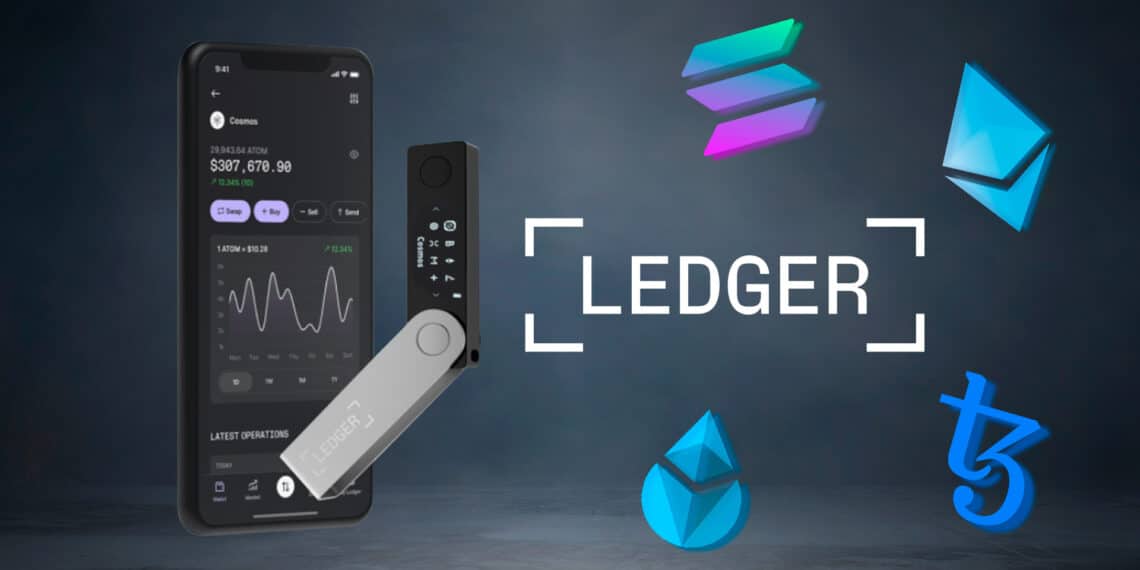
For end-to-end management I often pair hardware use with a desktop client that supports live updates; one tool I often link people to for managing a Ledger device is ledger, which helps bridge the gap between security and usability without exposing private keys.
That single integration reduces mistakes for users who are new to hardware wallets, and it scales into more sophisticated setups as you learn more.

Hmm…
A few more tactical tips.
Use a strong, unique PIN and enable passphrase options where available; consider the passphrase a 25th word that you must treat with the same seriousness as the seed.
When you physically store backups, pick locations that are both private and resilient: a safe, a bank box, or other secure locations—avoid obvious hiding spots.
And don’t tell social media about your holdings or your setup—oversharing invites targeting.

Really?
Cold storage is not “set and forget” unless you test it.
Practice a mock recovery every year.
Make sure the recovery process is documented but secure, and that trusted executors know how to proceed if something happens to you.
This is boring but it’s the difference between a plan and a funeral for your funds.

FAQ

What if I lose my hardware wallet?

Recover from your seed on a new device.
If you used multisig, follow the recovery process for each signer.
If you suspect the seed was exposed, move funds to a new set of keys fast, using a clean device and fresh seed.
Also, re-evaluate why the seed was exposed and close that vector—people often repeat mistakes.

Can I use the same seed for multiple hardware wallets?

Yes, technically you can initialize multiple devices with the same seed, which can be handy for backups.
However, that increases attack surface: anyone who accesses one device can potentially access all.
For serious balances, use distinct seeds or multisig arrangements.

Is a hardware wallet enough for DeFi?

It’s a major piece of the puzzle but not a silver bullet.
You still need to manage contract approvals, vet dApps, and manage operational practices.
Consider treating your hardware wallet as the stronghold for signing and combine it with careful on-chain hygiene.

Read More
  • imer
  • Sin categoría
  • diciembre 11, 2025

Why Yield Farming with ETH 2.0 Staking Derivatives Feels Like Progress — and Sometimes Like a Trap

Whoa! This is one of those topics that hooks you fast.

I remember the first time I locked ETH for staking. It felt like joining a club. Nervous, yeah. Excited too. Actually, wait—let me rephrase that: my instinct said this was the future, but something about the UX felt unfinished. Somethin’ about the way rewards were shown, and how the contract flows were opaque, bugged me.

Here’s the thing. Yield farming on top of ETH staking (especially via liquid staking tokens like stETH) is both brilliant and fragile. You can compound returns, keep liquidity, and participate in DeFi while contributing to network security. But on the flip side, you layer smart contract risk, peg risk, and centralization pressure onto consensus-layer exposure. On one hand it’s an elegant financial primitive; on the other, it magnifies any single point of failure.

A stylized diagram showing ETH going into a staking protocol, producing stETH, and then being used in DeFi pools

How the plumbing works (simple, then nerdy)

Quick version: you deposit ETH into a liquid staking protocol. You get a staking derivative token in return — think stETH — which represents your claim on staked ETH plus rewards. Then you can farm with that derivative in lending markets, liquidity pools, or leverage strategies.

Slow version: validators run consensus duties. Rewards accrue at the protocol level. The staking provider pools many deposits, runs validator clients (or coordinates operators), handles slashing mitigation, and issues a token that tracks the value of the staked asset. That token is a smart contract representation and must maintain peg through market mechanisms and incentives. If withdrawals are enabled and there’s a delay or queue, the peg can wobble under stress.

Initially I thought this solved everything. But then I realized the devil’s in the details — oracle updates, reward accrual cadence, contract upgradeability, and liquidity depth all matter. On paper it’s tidy; in practice you get overlapping risk vectors.

Top risks you need to know

Short list—read this first.

– Smart contract risk: Every time you interact with a yield farm or AMM, you’re trusting code. Bugs, privilege keys, and governance snafus exist everywhere.

– Peg & liquidity risk: stETH and similar tokens can trade at a discount during withdrawals or market stress. That’s a liquidity story. If the market loses confidence because withdrawals stall or TVL collapses, you pay.

– Slashing & validator ops: Good operators minimize this, but misconfiguration or coordinated attacks can cause slashing events that reduce value for all pooled stakers.

– Centralization risk: Large pooled staking services can attract outsized share of validated stake. That creates governance and censorship vectors—something the ETH community keeps an eye on.

– Composability risk: Using staked derivatives as collateral in other protocols multiplies counterparty exposure. One broken link, and your position could unwind in ugly ways.

Why many experienced people still use liquid staking for yield

Because it solves a real tradeoff: you want staking rewards but also economic flexibility. If you solo-stake, 32 ETH and validator ops are real costs. If you deposit into a trusted pool, your capital stays productive. That matters for strategies that need liquidity, like lending or LPs.

Also, smart people design ways to mitigate slippage: dynamic fees in AMMs, rebasing tokens, and concentrated liquidity on Curve. These systems can preserve peg more tightly than naïve pools, though they aren’t foolproof.

And look—I’m biased, but platforms that publish clear audits, operator matrices, and slashing insurance mechanisms are easier to trust. If you’re going to take on smart contract risk, at least quantify it.

Practical rules I actually follow

Okay, so check this out—my routine is simple but conservative.

1) Diversify across providers. Don’t give all your ETH to one contract or one staking operator. If one gets hit, you still have options.

2) Use deep liquidity pools for farming. High TVL and low slippage protect the peg and make exits cleaner.

3) Mind the fee and rebasing mechanics. Some staking derivatives rebase (your token balance increases); others change the exchange rate. That affects your accounting and tax math. Seriously—track it.

4) Limit leverage. Leverage amplifies yield and loss. If a peg breaks, margin calls can cascade quickly.

5) Read the governance docs. If a protocol can upgrade contracts with a multisig, figure out who controls it and what the emergency powers are. Trust but verify.

Where ETH 2.0 upgrades matter

ETH’s merge and subsequent Shanghai/Capella upgrades changed the game: withdrawals are now possible, and beacon-chain mechanics influence how staking derivatives behave under stress. Withdrawals reduce the locked-only argument and can help peg stability, though delays and validator exit queues still matter in a mass-withdrawal scenario.

On the technical side, MEV (Maximal Extractable Value) and proposer-builder separation influence validator revenue streams. That revenue matters because it changes the total staking yield and the composition of rewards — some of which can be more volatile because of MEV distribution.

So yes, your APY numbers shift as protocol-level economics change. Initially APYs might look consistent, but as reward sources (base issuance, MEV, tips) redistribute, derivative pricing adapts — sometimes faster than your spreadsheets.

Using stETH in yield strategies: examples and gotchas

One common play: deposit ETH into a provider, borrow stablecoin against stETH, then provide that stablecoin into yield protocols. This frees up capital but creates liquidation risk if stETH de-pegs. Another: provide stETH-ETH liquidity on Curve to capture swap fees and CRV emissions. Nice steady-ish yields, but watch for impermanent loss if ETH moves violently.

Also: bridges and wrapped variants add counterparty complexity. If you wrap stETH or move it across L2s, you’ve got extra layers that could fail independently.

Hmm… I used to ignore small basis risks. Not anymore. Little differentials compound over time.

Where to go for reliable info

If you want to dig in on a widely used liquid staking protocol, check the provider’s official resources and governance portals. A good starting point is the official site here: https://sites.google.com/cryptowalletuk.com/lido-official-site/ —read their docs, team disclosures, and validator lists before you commit.

FAQ

Is staking derivative yield “safe”?

Safe is relative. Staking derivatives mitigate the locked-liquidity problem but add smart contract and peg risks. If you accept those tradeoffs and take precautions (diversify, use audited contracts, avoid excessive leverage), it can be a reasonable strategy.

Can stETH de-peg permanently?

Permanent de-pegs are unlikely but not impossible. Most de-pegs are temporary and linked to withdrawal queues, panic selling, or systemic shocks. Depth in market-making and incentives usually restore parity, though recovery speed varies.

How should newcomers start?

Start small. Try a reputable liquid staking provider, use a single simple farm, and watch how the derivative behaves during volatility. Read smart contract audits. I’m not 100% sure you’ll feel comfortable right away, but it’s the safest way to learn.

Read More

Entradas recientes

  • Breaking News: Birmingham Escort Service Sees Record Demand in 2024
  • Breaking News: The Rise of Premium Escort Agency London – A New Era in Elegance and Discretion
  • Dubai Escort Service Sees Record Demand Amid Shifting Social Tides
  • Elite London Escorts Transform the Capital’s Social Scene: Demand Soars for Premium Escort Services
  • Rising Trend: VIP Escort Girls Dubai Define New Standards in Luxury Companion Services

Comentarios recientes

    Archivos

    • marzo 2026
    • febrero 2026
    • enero 2026
    • diciembre 2025
    • noviembre 2025
    • octubre 2025
    • septiembre 2025
    • agosto 2025
    • junio 2025
    • mayo 2025
    • abril 2025
    • marzo 2025

    Categorías

    • Sin categoría
    • WordPress

    Meta

    • Acceder
    • Feed de entradas
    • Feed de comentarios
    • WordPress.org

    © 2023 SRY Laboratorio SPR de RL. Todos los derechos reservados.
    Desarrollado por e-data

    imunify-bot-check